TU Delft, Bachelor End Project 2019
Client: Fugafour
Individual project
Come up with a new game to go viral in the nexts years, preferably based on an online trend.
For my bacherlor thesis I worked for a company that produces physical games. In order to create a meaningful and future-proof one I decided to use the Vision in Product Desing (ViP) method. Furthermore, from a sustainability point of view I did not want to create more plastic than people already had and needed. To see the result, feel free to click the button below, or keep scrolling to see the development process!
The process
When getting the design brief, I felt that creating just another boardgame would be fun, but that I could add more value to the client’s business portfolio. Therefore I decided to use the Vision in Product Design (ViP) method. In this method you forecast an expected future, which you are going to try and turn into a desirable one using a design intervention. In the near future I am seeing a conflict arising between parents and their children. On the one hand parents are striving for a perfect upbringing, but kids will be kids, rejecting a perfect mold. At the same time parents are more and more looking for meaningful and ‘real’ experiences, only further emphasising this conflict.


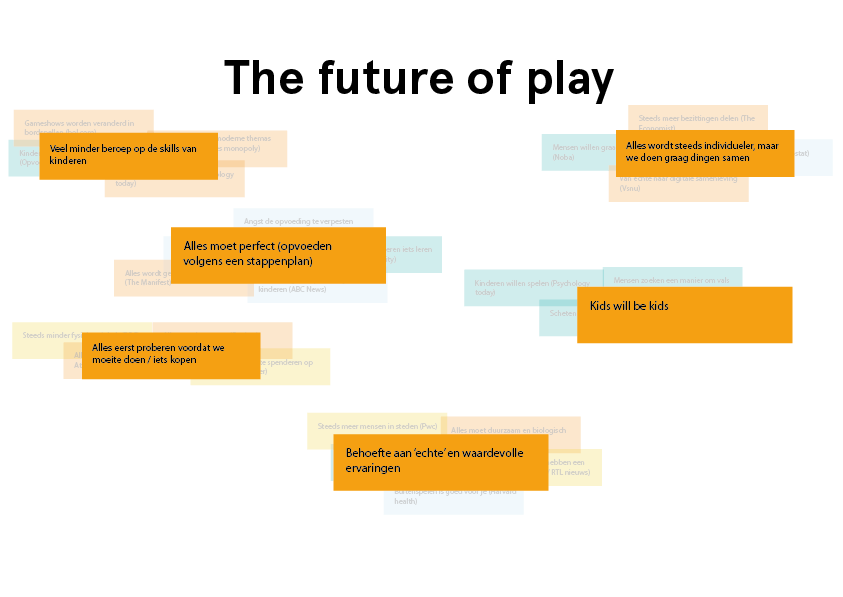
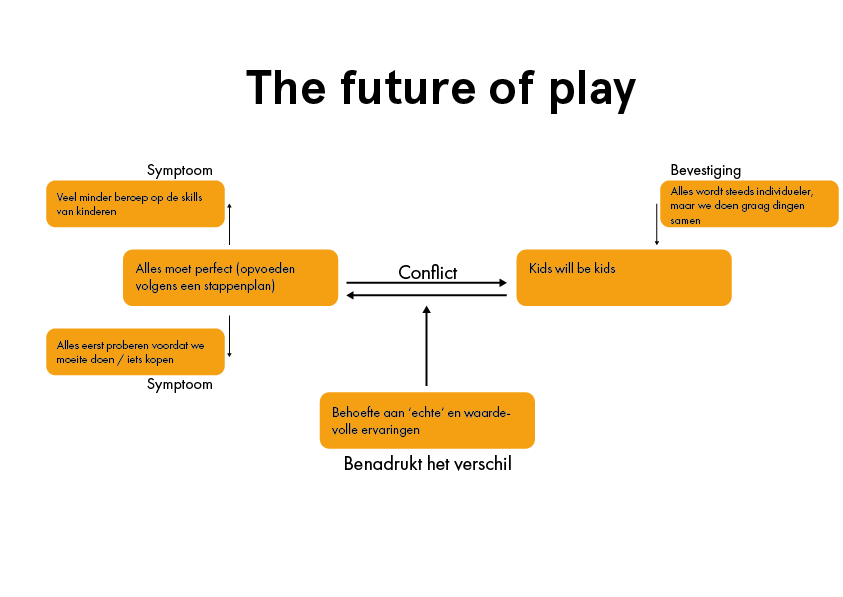

The goal was to go from the expected future on the left to the desired future on the right:

In order to reach this effect and get to this desired future I tested 6 possible games with a child of the target age, and tried to figure out which concept worked best, and also why that worked best, so that I could improve it even more. Furthermore, guiding really reminded my of a friend being a guide for a paratriathlete, who told me that guiding someone was “all about trust”. From here I found a concept that worked with the child setting up a track to be done, and then guiding the parent through it. This idea was tested and refined on multiple times to come up with the final design.


The final design
Tiger Trust is a game in which the child leads the parent around a obstacle track designed from things inside the house. The goal of the game is to create a meaningful experience and build trust between parent and child.


Firstly the lid needs to be taken off by opening a huge padlock, of which the code was on top of the box, since the children deemed storytelling from start to finish to be very important. Once opened the lid shows instructions and a grid for the children to put items in. Inside the shapes small pins are sticking out, locking the secret compartment for now. On top of these pins household items should be placed, instead of new ones, since I did not want to add anything unneessary from a sustainability point of view. This grid would be also be interchangeable, in order to be able to reuse the box often with new items. Furthermore, as it was important to have an online presence, the grid would be very instagram-friendly with its own hashtag.

Open the lid by finding the numbers hidden in the text 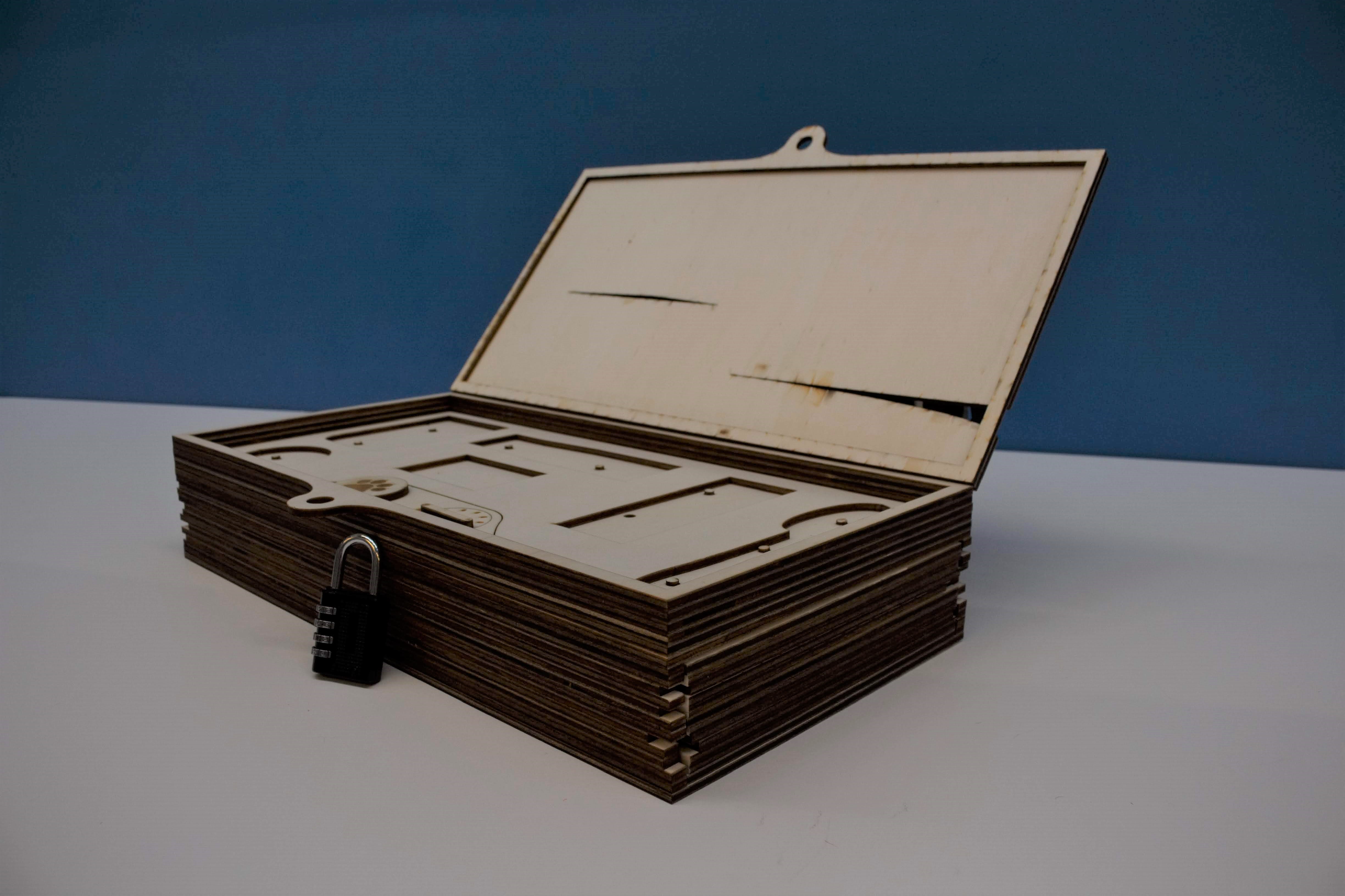
A grid to put items in 
Instructions to the kids to be placed in the lid, they have to find items in their own jungle, their house.


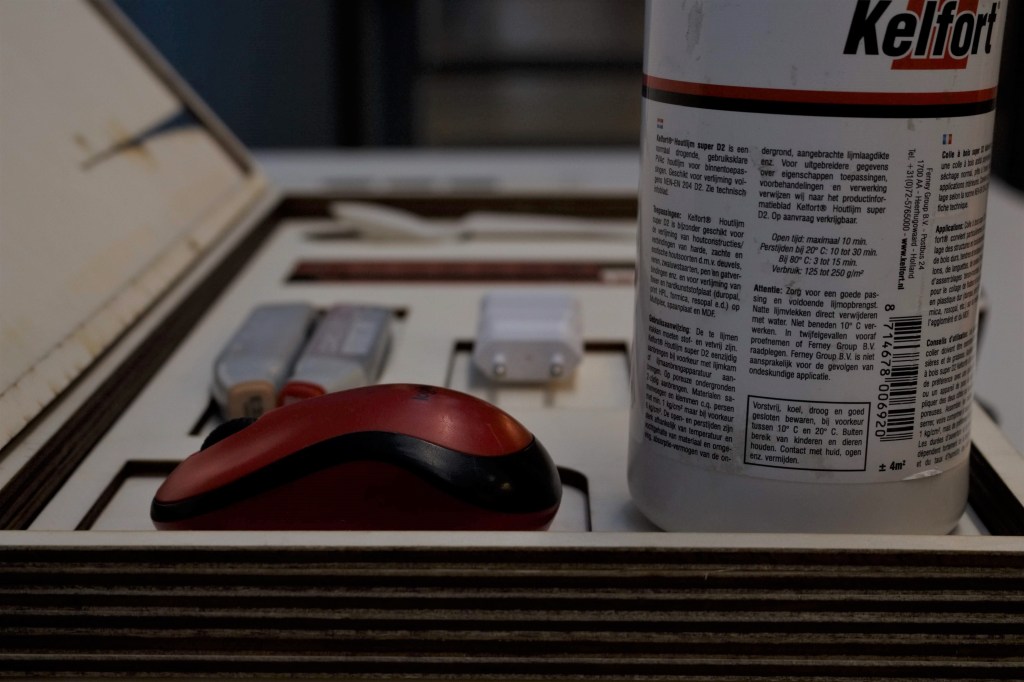

Once the grid is filled and all the pins are pressed down, it is possible to open the secret compartment at the bottom. Here you would find instructions on how to play the game, both with two or four people. The mask and tail would also be found in this compartment.
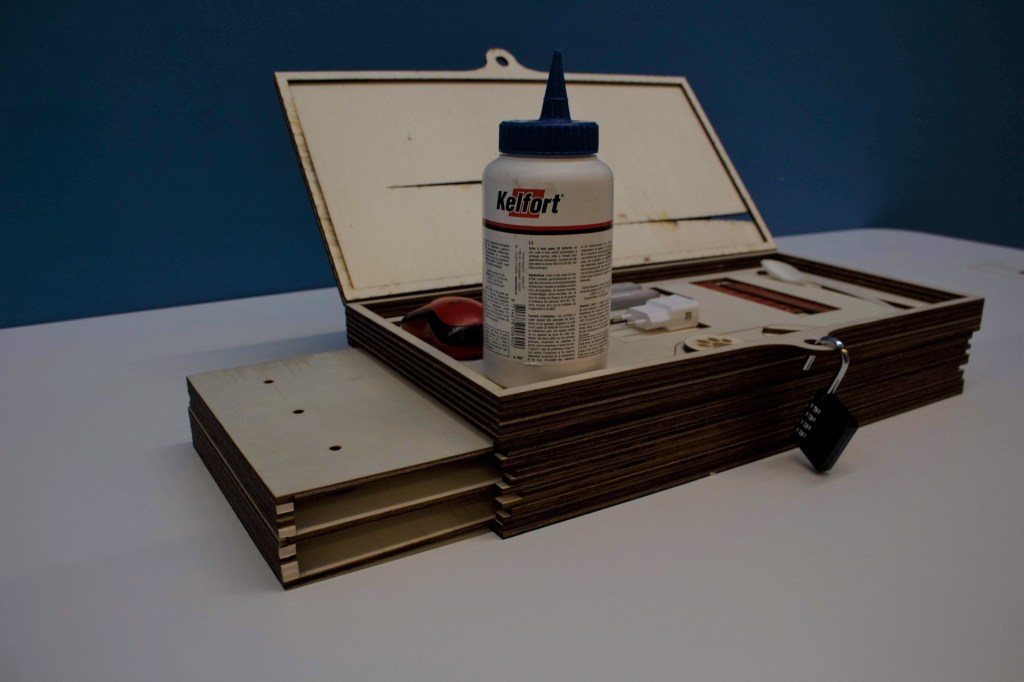


The most common game, the one for two people, would be to make a track out of all the items, and at some point you put down the paw. Once the paw is returned in the box, the time stops. One of the players would be the small tiger, and be blindfolded. Their task is holding onto the tail of the big tiger to get around the track. If playing with multiple teams you could compete in time, or the other team could hide the other items. Once all the items are returned you can put the paw back and see which team is fastest.
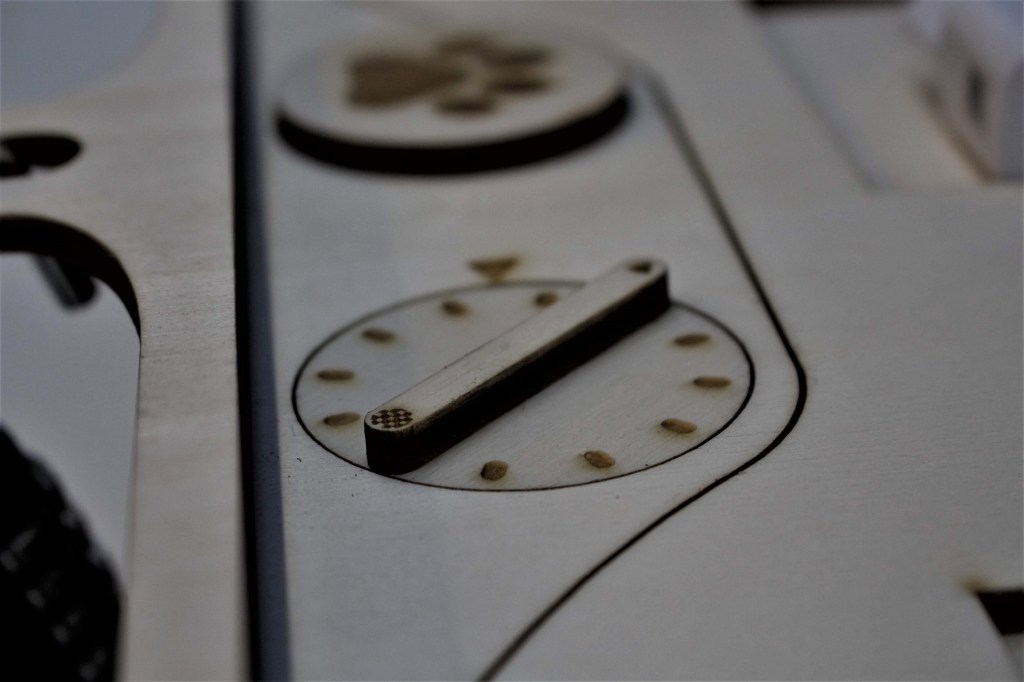
The timer to be used during the game 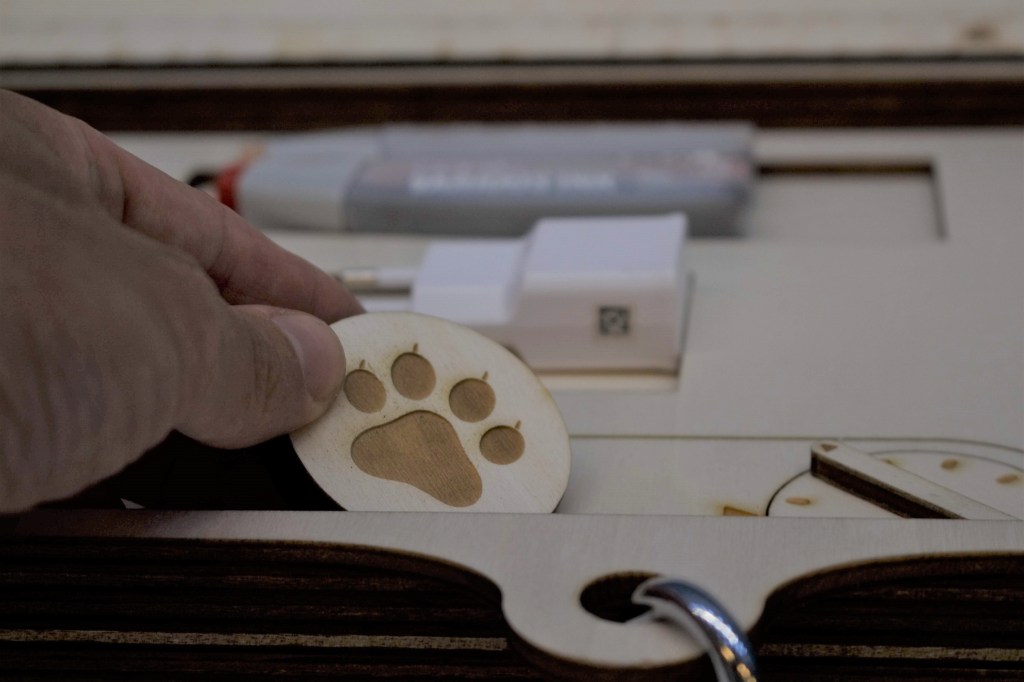
The paw stops the time
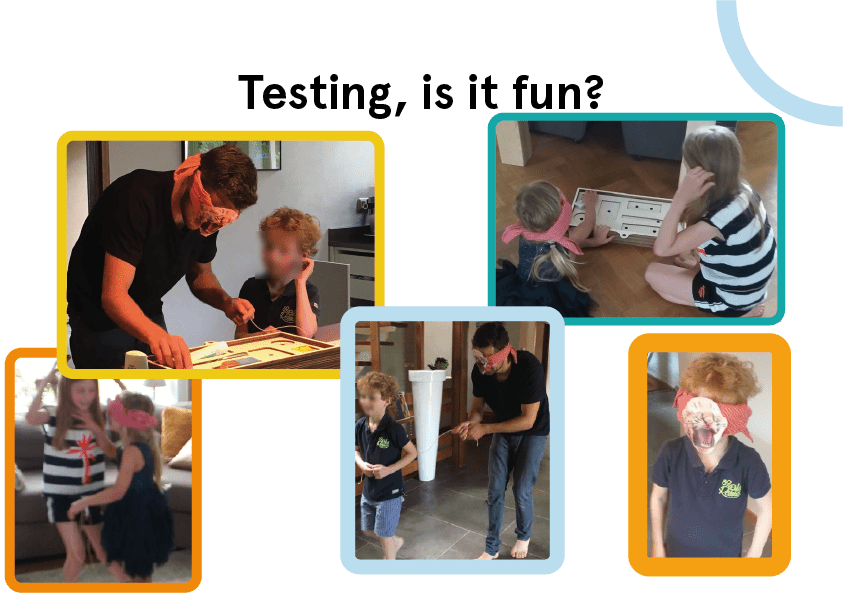
In a small setting it really empowered the child to take responsibility, and guide the parent the best he or she could. It still required a lot of trust from both sides, but that is exactly what the goal was. Among children there would be slightly less patience, resulting in a fun chaos dragging each other around the room.
 Daan Gehlen